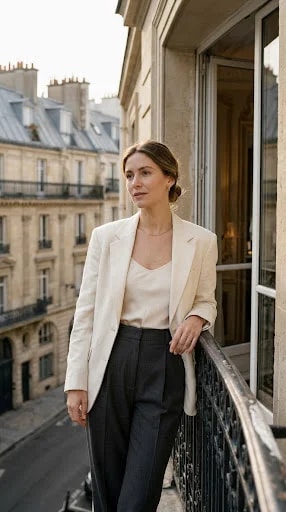
There is a certain magic that occurs when a carefully curated outfit finds its perfect architectural counterpart. A simple ivory blazer and dark trousers might be a classic combination, but standing against the ornate wrought-iron railing of a Parisian balcony, they become part of a larger narrative. The backdrop of Haussmann-era stone and intricate metalwork doesn’t just complement the look; it completes it, offering a visual harmony that speaks of a deep-rooted, almost effortless sophistication. The city itself becomes the most essential accessory, framing the wearer within a legacy of style and grace.
This synergy between personal style and environmental context elevates minimalism from a mere aesthetic to a philosophy of editing. The scene is not about adding more but about selecting the right elements, both sartorial and spatial. The clean lines of the trousers and the fluid silk of the camisole find an echo in the straight, vertical lines of the doorway and the soft curves of the balcony. It’s a masterclass in restraint, where every visible object—from the delicate necklace to the distant rooftop chimney—has a purpose. The composition is so deliberate that removing a single component would diminish the entire effect.
Ultimately, the power of such an image lies in its aspirational calm. The soft daylight, the muted palette of creams and charcoals, and the poised posture of the subject combine to create a feeling of serene confidence. It’s a quiet invitation to consider our own surroundings as a canvas for self-expression, to find beauty in the interplay between what we wear and where we stand. This is the essence of true class—a composed elegance that feels both intimate and grand, personal and universal in its appeal.